| Vendor | |
|---|---|

|
Liepman Literary Agency
Marc Koralnik |
| Original language | |
| French | |
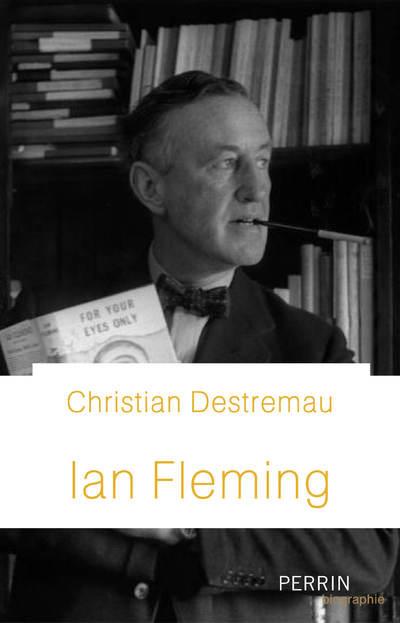
IAN FLEMING
Christian Destremau, with his extensive knowledge of British culture, skillfully paints an intimate portrait of this creative genius whose hero, from episode to episode, continues to fascinate millions of people.
Born into a wealthy Scottish family and growing up surrounded by strong personalities, Fleming, after a typical upper-class education, wandered far and wide seeking his destiny. His early years included the aborted start of a military career; a crucial passage at Reuters, where he learned to write simply and quickly; a few years in banking. He seemed headed towards a relatively mediocre future, distinguished only by his female conquests he was inclined to be a womanizer. The war was the real impetus. Fleming joined the naval intelligence service, concocting the most daring plans and standing out due to his problem-solving abilities and lack of respect for the hierarchy. Immediately after the war, he resumed his haphazard lifestyle, between freelance journalistic assignments and stays in Jamaica where he acquired a house in 1946 named Goldeneye.
Fleming took up literature more or less by chance in 1952, embarking on a decade of intense creativity and delivering, one after the other, about ten episodes of James Bond. The first, in 1953, was Casino Royale. Combining exotic adventures, elaborate intrigue, outlandish bad guys, torture, sadomasochism, seduction and sex, the series completely renovated the genre and attracted an ever-increasing number of readers. By the late 1960s, James Bond was a major export product, an element of Soft Power: 007 contributed, in the same way as the Queen, to the United Kingdom's global prestige. His influence was such, in the context of the Cold War, one wonders to what extent he might have influenced British and American foreign policy.
CHRISTIAN DESTREMAU is a historian of the Second World War and a keen connoisseur of British culture, having spent a good part of this childhood in the United Kingdom. He has written a masterful biography of Lawrence of Arabia (2014) and the highly acclaimed Ce que savaient les Alliés (What the Allies knew) (2007), Le Moyen-Orient pendant la Seconde Guerre mondiale (The Middle East during the Second World War) (2011) and Churchill et la France (Churchill and France)(2017), all published by Perrin.
Fleming took up literature more or less by chance in 1952, embarking on a decade of intense creativity and delivering, one after the other, about ten episodes of James Bond. The first, in 1953, was Casino Royale. Combining exotic adventures, elaborate intrigue, outlandish bad guys, torture, sadomasochism, seduction and sex, the series completely renovated the genre and attracted an ever-increasing number of readers. By the late 1960s, James Bond was a major export product, an element of Soft Power: 007 contributed, in the same way as the Queen, to the United Kingdom's global prestige. His influence was such, in the context of the Cold War, one wonders to what extent he might have influenced British and American foreign policy.
CHRISTIAN DESTREMAU is a historian of the Second World War and a keen connoisseur of British culture, having spent a good part of this childhood in the United Kingdom. He has written a masterful biography of Lawrence of Arabia (2014) and the highly acclaimed Ce que savaient les Alliés (What the Allies knew) (2007), Le Moyen-Orient pendant la Seconde Guerre mondiale (The Middle East during the Second World War) (2011) and Churchill et la France (Churchill and France)(2017), all published by Perrin.
| Available products |
|---|
|
Book
Published 2020-04-01 by Perrin |