Skip to content
Responsive image
Vendor
Liepman Literary Agency
Marc Koralnik
Original language
English

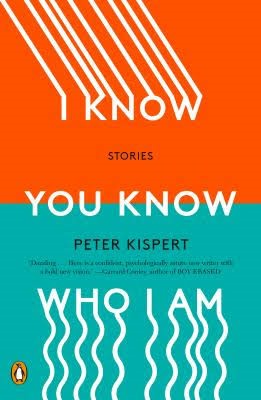
I KNOW YOU KNOW WHO I AM

Peter Kispert

Stories

In the linked and tightly thematic stories of I KNOW YOU KNOW WHO I AM, Kispert explores deception, performance, and the uneasiness of reconciling a queer identity with the wider world, with his characters often turning to lies as a tactic for navigating that dissonance.
Throughout this striking debut collection we meet characters who have lied, who have sometimes created elaborate falsehoods, and who now must cope with the way that those deceptions eat at the very fabric of their lives and relationships. In the title story, the narrator, desperate to save a love affair on the rocks, hires an actor to play a friend he invented in order to seem less lonely, after his boyfriend catches on to his compulsion for lying and demands to know this friend is real; in "Aim for the Heart", a man's lies about a hunting habit leave him with an unexpected deer carcass and the need to parse unsettling high school memories; in "Rorschach", a theater producer runs a show in which death row inmates are crucified in an on-stage rendering of the New Testament, while being haunted daily by an unrequited love and nightly by ghosts of his own creation.

In I Know You Know Who I Am, Kispert deftly explores deception and performance, the uneasiness of reconciling a queer identity with the wider world, and creates a sympathetic, often darkly humorous, portrait of characters searching for paths to intimacy.

Peter Kispert's stories and essays have appeared in Playboy, Esquire, Out Magazine, McSweeney's, Salon, The Carolina Quarterly, Slice, and elsewhere. He has worked as an editorial assistant at Penguin Random House and as editor-in-chief of Indiana Review, where he founded the annual Blue Light Books Prize with IU Press. He is a graduate of Indiana University's MFA program, where he was an Ernest Hemingway fellow in fiction and taught undergraduate workshops. He lives in Manhattan.
Available products
Book

Published 2020-02-01 by Penguin

Comments

Kispert's piercing debut collection features characters caught in ambivalence and deceit. Many of the stories undercut humor with pangs of regret, such as “In the Palm of His Hand,” which traces the effects of a 20-something man's detachment as he pretends to be a devout Christian in order to score a date with a religious man. The darkly satirical “Rorschach” tracks a theater entrepreneur's anguish over the success of his bizarre stage piece “Crucifixion,” which features public executions of death row inmates onstage. Ten of the 21 stories are short-shorts, serving as palate cleansers between the longer, more ambiguous pieces. “Goldfish Bowl” wryly captures the dysfunctional patterns of a failed relationship in two pages, while the full-length title story follows a man's desperate attempt to hire an actor to impersonate a friend in order to hide his loneliness from his boyfriend. Often, the protagonists sabotage their potential happiness via obsessive self-reflection. The breezy style occasionally belies the effort required to connect the short, splintered scenes and peripheral characters into a coherent picture, though they leave the reader with juicy questions to chew on. This lively and provocative work crisply reflects the challenges of modern love. Agent: Caroline Eisenmann, Frances Goldin Literary Agency. (Feb.)

The characters in Kispert's debut collection grapple with chaotic lives, troubled memories, and shifting identities. The narrator of the title story pays a man to act out the role of a fictional friend from the tales he's told his boyfriend about his life before they met. This sets in motion a cascading series of events that prompts a meditation on the paradoxical nature of “true stories,” which in turn casts a long shadow over the rest of the book. The next story is “Puncture,” whose second sentence feels like a reaction to "I Know You Know": “Clark is color blind, or so he's telling me.” Kispert wrestles with grand themes, but he's equally adept at memorable miniatures. In “Signs,” he makes effective use of brevity, creating power both in what's told and what's left out. The collection's first section, called "I Know," abounds with scenes of deception, so when the second section, "You Know," opens with a story narrated by an actor, it seems like the logical next step. The final story, “Mooring,” plays out with echoes of the opener, not unlike a strange remix. It's all in keeping with Kispert's attention to the border between fiction and reality. While his depictions of contemporary life are wholly immersive, he also displays a talent for the speculative. Kyle, the protagonist of “How to Live Your Best Life,” inhabits a marginal existence with his partner, Jerry, and their daughter, Chloe. In between acts of petty theft, he ponders whether they should appear on a game show that's a blend of The Newlywed Game and Family Feud, albeit with potentially lethal consequences. And in “Rorschach,” live crucifixions carried out on death-row inmates garbed as Jesus have become a hot ticket around the country. Kispert blends sharp characterization with intriguing premises throughout this memorable collection.

"The 21 stories in “I Know You Know Who I Am” contain countless liars, all intent on portraying themselves in the way they feel they should be seen. Many of these characters are the types often relegated to the role of best friend: underdogs, men forced to play wingman to their more beautiful and dopey companions. But Kispert's collection allows them the spotlight, and watching them star in their own life stories is both squirm-worthy and riveting." Read more...

Every work of fiction is a sort of lie, but this collection is actually about liars, mostly, and also about the lengths people go to in order to feel less alone. A bakery cashier claims to be a baker to impress a man; an actor embraces the terrible movies he's destined to be in and contemplates his boyfriend's gig taking sexy pics of other men; a family prepares for a game show with deadly consequences; the director of a live crucifixion is psychoanalyzed by a friend; and a man pretending to be a swimmer dives into the ocean. These stories have emotional consequence, but they also playfully subvert expectations. Their protagonists are mostly homosexual and mostly out, that is they're gay and in the world, navigating degrees of outness as they search for themselves. Kispert's short fiction is a performative lie that reveals truth to readers in subtle, surprising ways that literary fiction lovers will devour. One character writes, “We tell lies to make ourselves believe the stories we have, to sink them deeper into us, so we don't forget.” Kispert's stories dig deep, and they're far from forgettable.