| Vendor | |
|---|---|

|
Liepman Literary Agency
Marc Koralnik |
| Original language | |
| English | |
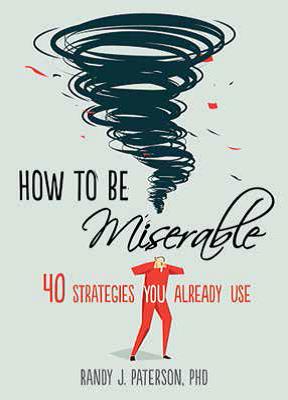
HOW TO BE MISERABLE
40 Strategies You Already Use
Sometimes when we're sad or just dissatisfied, our instincts tell us to do the opposite of what we should dosuch as focusing on the negative, dwelling on what we can't change, isolating ourselves from loved ones, eating junk food, or overindulging in alcohol. In How to Be Miserable, psychologist Randy J. Paterson
outlines forty specific behaviors and habits, whichif followedare sure to lead to a lifetime of unhappiness. On the other hand, if readers do the opposite, they may yet join the ranks of happy people everywhere!
This tongue-in-cheek guide will help readers identify the behaviors that make them unhappy, and discover how they are holding themselves back from a life of contentment. They'll learn to spot the tried-and-true traps that increase feelings of dissatisfaction, foster a lack of motivation, and detract from their quality of lifeas well as ways to avoid them. So, for readers ready to live the lives they want (or not?), this irreverent guide can light the way.
Randy J. Paterson, PhD, is director of Changeways Clinic, a private psychotherapy practice in Vancouver, BC, Canada. He is author of The Assertiveness Workbook and Your Depression Map, and presents lectures and workshops internationally on topics including mental health policy, CBT, the nature and treatment of depression and anxiety disorders, and strategies for private practice management. Paterson is the 2008 recipient of the Canadian Psychological Association's Distinguished Practitioner Award. He resides in Vancouver, BC.
outlines forty specific behaviors and habits, whichif followedare sure to lead to a lifetime of unhappiness. On the other hand, if readers do the opposite, they may yet join the ranks of happy people everywhere!
This tongue-in-cheek guide will help readers identify the behaviors that make them unhappy, and discover how they are holding themselves back from a life of contentment. They'll learn to spot the tried-and-true traps that increase feelings of dissatisfaction, foster a lack of motivation, and detract from their quality of lifeas well as ways to avoid them. So, for readers ready to live the lives they want (or not?), this irreverent guide can light the way.
Randy J. Paterson, PhD, is director of Changeways Clinic, a private psychotherapy practice in Vancouver, BC, Canada. He is author of The Assertiveness Workbook and Your Depression Map, and presents lectures and workshops internationally on topics including mental health policy, CBT, the nature and treatment of depression and anxiety disorders, and strategies for private practice management. Paterson is the 2008 recipient of the Canadian Psychological Association's Distinguished Practitioner Award. He resides in Vancouver, BC.
| Available products |
|---|
|
Book
Published 2016-05-01 by New Harbinger |