| Vendor | |
|---|---|

|
Mohrbooks Literary Agency
Sebastian Ritscher |
| Original language | |
| English | |
| Categories | |
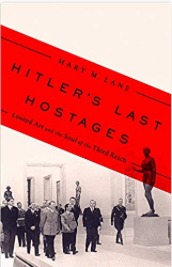
HITLER'S LAST HOSTAGES
Looted Art and the Soul of the Third Reich
The ambitious, riveting story of Hitler's obsession with art, how it fueled his vision of a purified Nazi state, and the fate of the artwork that was hidden, stolen, or destroyed to "cleanse" German culture.
The story of art is integral to the story of the rise of Nazi Germany. Adolf Hitler, an artist himself, was obsessed with art in particular, the aesthetic of a purified regime, scoured of "degenerate" influences that characterized Germany during the 1920s and 1930s, when it was more culturally innovative and daring than anywhere else in the word.
The Germany of Cabaret, hyperinflation, and Rosa Luxemburg was a society in turmoil, and among those who reveled in the discord were a generation of artists for whom art was a political weapon. They were fierce, inspired, and rebellious, but to Hitler, they were anathema. When they came to power in 1933, Hitler and Goebbels set their aesthetic vision into motion and removed degenerate art from German life: Grosz and his family fled to America; museums were purged; and great works disappeared, only a fraction of which were rediscovered at the end of the Second World War. Most remained in garrets and cellars, the last hostages of the era of the Reich.
In 2014, 1290 works by Chagall, Picasso, Matisse, Otto Dix, Max Beckmann and others were rediscovered. In Hitler's Last Hostages, Mary Lane brilliantly tells the story of art and the Third Reich, and the fate of Germany's great era of artists as they fought to survive the Nazi era.
Mary M. Lane is a nonfiction writer and journalist specializing in Western European art and Western European history. Lane gained recognition as the chief European art reporter for the Wall Street Journal and for publishing numerous scoops on the art trove of Hildebrand Gurlitt. Since leaving the Journal in December 2015, Lane has worked as a European art contributor for the New York Times and contributed to Mike Pesca's reporting at Slate. She splits her time between Berlin and Virginia (she is fluent in German).
The Germany of Cabaret, hyperinflation, and Rosa Luxemburg was a society in turmoil, and among those who reveled in the discord were a generation of artists for whom art was a political weapon. They were fierce, inspired, and rebellious, but to Hitler, they were anathema. When they came to power in 1933, Hitler and Goebbels set their aesthetic vision into motion and removed degenerate art from German life: Grosz and his family fled to America; museums were purged; and great works disappeared, only a fraction of which were rediscovered at the end of the Second World War. Most remained in garrets and cellars, the last hostages of the era of the Reich.
In 2014, 1290 works by Chagall, Picasso, Matisse, Otto Dix, Max Beckmann and others were rediscovered. In Hitler's Last Hostages, Mary Lane brilliantly tells the story of art and the Third Reich, and the fate of Germany's great era of artists as they fought to survive the Nazi era.
Mary M. Lane is a nonfiction writer and journalist specializing in Western European art and Western European history. Lane gained recognition as the chief European art reporter for the Wall Street Journal and for publishing numerous scoops on the art trove of Hildebrand Gurlitt. Since leaving the Journal in December 2015, Lane has worked as a European art contributor for the New York Times and contributed to Mike Pesca's reporting at Slate. She splits her time between Berlin and Virginia (she is fluent in German).
| Available products |
|---|
|
Book
Published 2019-09-10 by Public Affairs |