| Vendor | |
|---|---|

|
Liepman Literary Agency
Marc Koralnik |
| Original language | |
| French | |
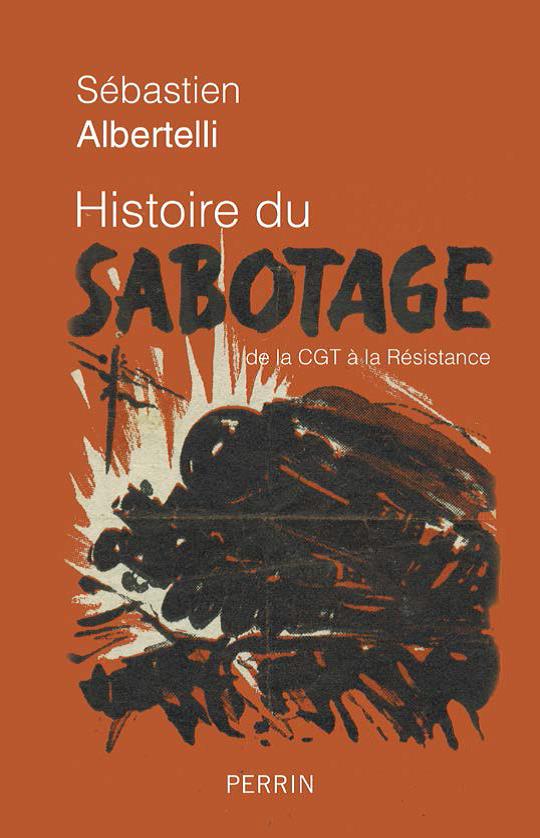
HISTOIRE DU SABOTAGE. De la CGT à la résistance
At a time when the issue has again become relevant, the first history of sabotage and saboteurs during World War II.
Sabotage has become one of the weapons of modern combat, but it is more commonly associated with the Resistance during World War II. The phenomenon, however, was not born with the « army of shadows ». It emerged in the last decades of the 19th century, at the meeting point between labor unions and the military. The saboteur progressively embodied a new form of threat, whether its origins were anarchist, communist or German. The fear that the saboteur inspired, however, was disproportionate to the
real danger he represented.
Including during the Second World War, which marked a major milestone in the history of sabotage. The practice became widespread, each of the major players gradually giving it a place in their strategy: the Resistance, the Gaullist and the British secret services, the Allied authorities and the German services. Everyone believed, to varying degrees, in its effectiveness, the evaluation of which this author calls into question. In any case, it was the Resistance that marked the transition from the era of experimentation to that of full development, as evidenced by Sébastien Albertelli in his presentation, based on largely unpublished archival documentation.
SÉBASTIEN ALBERTELLI is a professor of history (his PhD dissertation was supervised by Jean-Pierre Azéma, one of the most renowned historians of the Second World War). In 2008, his thesis was awarded the Philippe Viannay-Défense de la France award from the Fondation de la Résistance. He contributed to the Dictionnaire de la Résistance (Dictionary of the Resistance) and the Dictionnaire de Gaulle (De Gaulle dictionary) (Bouquins collection, 2006) and published Les services secrets du général de Gaulle (The secret
services of General de Gaulle) with Perrin in 2009 (4,000 copies sold).
real danger he represented.
Including during the Second World War, which marked a major milestone in the history of sabotage. The practice became widespread, each of the major players gradually giving it a place in their strategy: the Resistance, the Gaullist and the British secret services, the Allied authorities and the German services. Everyone believed, to varying degrees, in its effectiveness, the evaluation of which this author calls into question. In any case, it was the Resistance that marked the transition from the era of experimentation to that of full development, as evidenced by Sébastien Albertelli in his presentation, based on largely unpublished archival documentation.
SÉBASTIEN ALBERTELLI is a professor of history (his PhD dissertation was supervised by Jean-Pierre Azéma, one of the most renowned historians of the Second World War). In 2008, his thesis was awarded the Philippe Viannay-Défense de la France award from the Fondation de la Résistance. He contributed to the Dictionnaire de la Résistance (Dictionary of the Resistance) and the Dictionnaire de Gaulle (De Gaulle dictionary) (Bouquins collection, 2006) and published Les services secrets du général de Gaulle (The secret
services of General de Gaulle) with Perrin in 2009 (4,000 copies sold).
| Available products |
|---|
|
Book
Published 2016-05-01 by Perrin |