| Vendor | |
|---|---|

|
Fritz Agency
Christian Dittus |
| Original language | |
| English | |
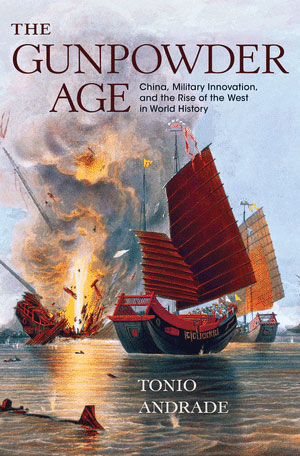
GUNPOWDER AGE
China, Military Innovation, and the Rise of the West in World History
The Chinese invented gunpowder and began exploring its military uses as early as the 900s, four centuries before the technology passed to the West. But by the early 1800s, China had fallen so far behind the West in gunpowder warfare that it was easily defeated by Britain in the Opium War of 183942. What happened? Tonio Andrade offers a compelling new answer, opening a fresh perspective on a key question of world history: why did the countries of western Europe surge to global importance starting in the 1500s while China slipped behind?
Historians have long argued that gunpowder weapons helped Europeans establish global hegemony. Yet the inhabitants of what is today China not only invented guns and bombs but also, as Andrade shows, continued to innovate in gunpowder technology through the early 1700smuch longer than previously thought. Why, then, did China become so vulnerable? Andrade argues that one significant reason is that it was out of practice fighting wars, having enjoyed nearly a century of relative peace, since 1760. Indeed, he demonstrates that Chinalike Europewas a powerful military innovator, particularly during times of great warfare, such as the violent century starting after the Opium War, when the Chinese once again quickly modernized their forces. Today, China is simply returning to its old position as one of the world's great military powers.
Tonio Andrade is professor of history at Emory University .
Historians have long argued that gunpowder weapons helped Europeans establish global hegemony. Yet the inhabitants of what is today China not only invented guns and bombs but also, as Andrade shows, continued to innovate in gunpowder technology through the early 1700smuch longer than previously thought. Why, then, did China become so vulnerable? Andrade argues that one significant reason is that it was out of practice fighting wars, having enjoyed nearly a century of relative peace, since 1760. Indeed, he demonstrates that Chinalike Europewas a powerful military innovator, particularly during times of great warfare, such as the violent century starting after the Opium War, when the Chinese once again quickly modernized their forces. Today, China is simply returning to its old position as one of the world's great military powers.
Tonio Andrade is professor of history at Emory University .
| Available products |
|---|
|
Book
Published 2016-01-01 by Princeton University Press |