| Vendor | |
|---|---|

|
Liepman Literary Agency
Marc Koralnik |
| Original language | |
| English | |
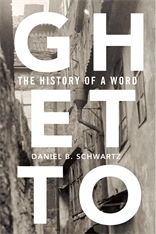
GHETTO
The History of a Word
A historian traces the curious life of the word "ghetto", from its birth in sixteenth-century Venice to its ideologically-loaded present.
Few words are as ideologically charged as ghetto. Its early uses centered on two cities: Venice, where it referred to the segregation of the Jews in 1516, and Rome, where the ghetto survived as a compulsory institution until the fall of the Papal States in 1870, long after it had ceased to exist elsewhere.
Ghetto: The History of a Word offers a fascinating account of the changing nuances of this slippery word, from its coinage to the present day. It details how the ghetto emerged as an ambivalent metaphor for premodern Judaism in the nineteenth century and how it was later revived to refer to everything from densely populated Jewish immigrant enclaves in modern cities to the hyper-segregated holding pens of Nazi-occupied Eastern Europe. We see how this ever-evolving word traveled across the Atlantic Ocean, settled into New York's Lower East Side and Chicago's Near West Side, then came to be more closely associated with African Americans than with Jews.
Chronicling this sinuous transatlantic odyssey, Daniel B. Schwartz reveals how the history of ghettos is tied up with the struggle and argument over the meaning of a word. Paradoxically, the term ghetto came to loom larger in discourse about Jews when Jews were no longer required to live in legal ghettos. At a time when the Jewish associations have been largely eclipsed, Ghetto retrieves the history of a disturbingly resilient word.
DANIEL B. SCHWARTZ is author of The First Modern Jew: Spinoza and the History of an Image, which won the Salo Wittmayer Baron Book Prize for the best first book in Jewish Studies and was a finalist for the National Jewish Book Award. He is Associate Professor of History and Judaic Studies at the George Washington University and worked on Ghetto as a Kluge Fellow at the Library of Congress and as the Sosland Fellow at the United States Holocaust Memorial Museum.
Ghetto: The History of a Word offers a fascinating account of the changing nuances of this slippery word, from its coinage to the present day. It details how the ghetto emerged as an ambivalent metaphor for premodern Judaism in the nineteenth century and how it was later revived to refer to everything from densely populated Jewish immigrant enclaves in modern cities to the hyper-segregated holding pens of Nazi-occupied Eastern Europe. We see how this ever-evolving word traveled across the Atlantic Ocean, settled into New York's Lower East Side and Chicago's Near West Side, then came to be more closely associated with African Americans than with Jews.
Chronicling this sinuous transatlantic odyssey, Daniel B. Schwartz reveals how the history of ghettos is tied up with the struggle and argument over the meaning of a word. Paradoxically, the term ghetto came to loom larger in discourse about Jews when Jews were no longer required to live in legal ghettos. At a time when the Jewish associations have been largely eclipsed, Ghetto retrieves the history of a disturbingly resilient word.
DANIEL B. SCHWARTZ is author of The First Modern Jew: Spinoza and the History of an Image, which won the Salo Wittmayer Baron Book Prize for the best first book in Jewish Studies and was a finalist for the National Jewish Book Award. He is Associate Professor of History and Judaic Studies at the George Washington University and worked on Ghetto as a Kluge Fellow at the Library of Congress and as the Sosland Fellow at the United States Holocaust Memorial Museum.
| Available products |
|---|
|
Book
Published 2019-09-01 by Harvard University Press |