| Vendor | |
|---|---|

|
Liepman Literary Agency
Marc Koralnik |
| Original language | |
| English | |
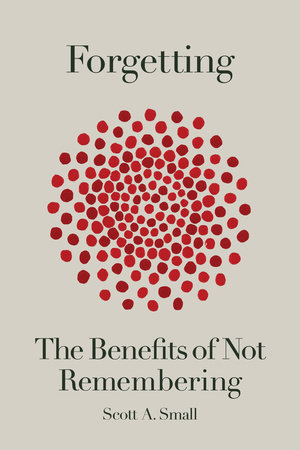
FORGETTING
The Benefits of Not Remembering
A renowned neurologist explains why our routine forgetting--of names, dates, even house keys--is not a brain failure but actually one of our minds' most beneficial functions.
Who wouldn't want a better memory? Dr. Scott Small has dedicated his career to understanding why memory fails us. As director of the Alzheimer's Disease Research Center at Columbia, he focuses largely on patients who experience pathological forgetting, and it is in contrast to their suffering that normal forgetting, which we experience all the time, every day, appears in sharp relief.
Until recently, most everyone, memory scientists included, believed that forgetting served no purpose. But new research in psychology, neurobiology, medicine, and computer science tells a different story. As it turns out, forgetting is not a failure of our minds. It's not even a benign glitch. It is, in fact, good for us--a required function for our minds to work best.
Forgetting benefits our cognitive and creative abilities, emotional well-being, and even our personal and societal health. As infuriating as a typical lapse can be, it's precisely what opens our minds up to making better decisions and experiencing joy, relationships, and artistic and spiritual flourishing. From studies of bonobos in the wild to visits with the iconic painter Jasper Johns and the renowned expert on decision-making Daniel Kahneman, Scott Small looks across disciplines to put new scientific findings about memory into illuminating context. The next time you forget where you left your keys, remember that a little forgetting does a lot of good.
Scott A. Small M.D. is a Professor of Neurology & Psychiatry at Columbia University, where he is the Director of the Alzheimer's Disease Center. Dr. Small is a leading authority on Memory. He has run an NIH-funded laboratory for nearly 20 years and has published over 130 studies on memory function and how it malfunctions. Dr. Small is also a physician with an expertise in aging & dementia and has treated patients suffering from a wide range of memory disorders. Acknowledged by Academia with various awards, including the, the McKnight Neuroscience of Brain Disorders Award, the Derek Denny-Brown Young Neurological Scholar Award from the American Neurological Association, and the Lamport Award for Excellence in Clinical Science Research from Columbia University, his seminal contributions have generated broad interest. His work has been covered by the general press, including front-page articles in the New York Times, and articles in The New Yorker and Time magazine and such international publications as Die Welt, Le Figaro, Globo, Sydney Morning Herald, Republica, The Globe and Mail, El Mundo, The Times of London, Dr. Small is one of those experts who can communicate science clearly, as demonstrated on multiple Charlie Rose guest appearances and in other TV venues.
Until recently, most everyone, memory scientists included, believed that forgetting served no purpose. But new research in psychology, neurobiology, medicine, and computer science tells a different story. As it turns out, forgetting is not a failure of our minds. It's not even a benign glitch. It is, in fact, good for us--a required function for our minds to work best.
Forgetting benefits our cognitive and creative abilities, emotional well-being, and even our personal and societal health. As infuriating as a typical lapse can be, it's precisely what opens our minds up to making better decisions and experiencing joy, relationships, and artistic and spiritual flourishing. From studies of bonobos in the wild to visits with the iconic painter Jasper Johns and the renowned expert on decision-making Daniel Kahneman, Scott Small looks across disciplines to put new scientific findings about memory into illuminating context. The next time you forget where you left your keys, remember that a little forgetting does a lot of good.
Scott A. Small M.D. is a Professor of Neurology & Psychiatry at Columbia University, where he is the Director of the Alzheimer's Disease Center. Dr. Small is a leading authority on Memory. He has run an NIH-funded laboratory for nearly 20 years and has published over 130 studies on memory function and how it malfunctions. Dr. Small is also a physician with an expertise in aging & dementia and has treated patients suffering from a wide range of memory disorders. Acknowledged by Academia with various awards, including the, the McKnight Neuroscience of Brain Disorders Award, the Derek Denny-Brown Young Neurological Scholar Award from the American Neurological Association, and the Lamport Award for Excellence in Clinical Science Research from Columbia University, his seminal contributions have generated broad interest. His work has been covered by the general press, including front-page articles in the New York Times, and articles in The New Yorker and Time magazine and such international publications as Die Welt, Le Figaro, Globo, Sydney Morning Herald, Republica, The Globe and Mail, El Mundo, The Times of London, Dr. Small is one of those experts who can communicate science clearly, as demonstrated on multiple Charlie Rose guest appearances and in other TV venues.
| Available products |
|---|
|
Book
Published 2021-06-01 by Crown |