| Vendor | |
|---|---|

|
Fritz Agency
Christian Dittus |
| Original language | |
| English | |
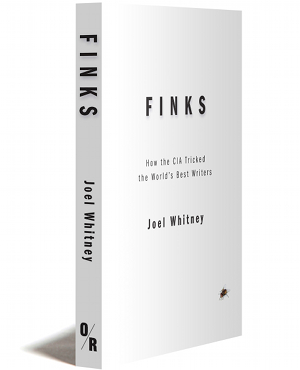
FINKS
How the CIA Tricked the World's Best Writers
When news broke that the CIA had colluded with literary magazines to produce cultural propaganda throughout the Cold War, a debate began that has never been resolved. The story continues to unfold, with the reputations of some of America's best-loved literary figuresincluding Peter Matthiessen, George Plimpton, and Richard Wrighttarnished as their work for the intelligence agency has come to light.
Finks is a tale of two CIAs, and how they blurred the line between propaganda and literature. One CIA created literary magazines that promoted American and European writers and cultural freedom, while the other toppled governments, using assassination and censorship as political tools. Defenders of the cultural CIA argue that it should have been lauded for boosting interest in the arts and freedom of thought, but the two CIAs had the same undercover goals, and shared many of the same methods: deception, subterfuge and intimidation.
Finks demonstrates how the good-versus-bad CIA is a false divide, and that the cultural Cold Warriors again and again used anti-Communism as a lever to spy relentlessly on leftists, and indeed writers of all political inclinations, and thereby pushed U.S. democracy a little closer to the Soviet model of the surveillance state.
Joel Whitney, manager of arts and cultural programs at Brooklyn Public Library, is a cofounder and editor at large of Guernica: A Magazine of Art & Politics. His writing has appeared in The New York Times, The Wall Street Journal, The New Republic, Boston Review, The San Francisco Chronicle, Dissent, Salon, NPR, New York Magazine and The Sun. His poetry has appeared in The Paris Review, The Nation, and Agni.
Finks is a tale of two CIAs, and how they blurred the line between propaganda and literature. One CIA created literary magazines that promoted American and European writers and cultural freedom, while the other toppled governments, using assassination and censorship as political tools. Defenders of the cultural CIA argue that it should have been lauded for boosting interest in the arts and freedom of thought, but the two CIAs had the same undercover goals, and shared many of the same methods: deception, subterfuge and intimidation.
Finks demonstrates how the good-versus-bad CIA is a false divide, and that the cultural Cold Warriors again and again used anti-Communism as a lever to spy relentlessly on leftists, and indeed writers of all political inclinations, and thereby pushed U.S. democracy a little closer to the Soviet model of the surveillance state.
Joel Whitney, manager of arts and cultural programs at Brooklyn Public Library, is a cofounder and editor at large of Guernica: A Magazine of Art & Politics. His writing has appeared in The New York Times, The Wall Street Journal, The New Republic, Boston Review, The San Francisco Chronicle, Dissent, Salon, NPR, New York Magazine and The Sun. His poetry has appeared in The Paris Review, The Nation, and Agni.
| Available products |
|---|
|
Book
Published 2016-12-01 by OR Books |