| Vendor | |
|---|---|

|
Liepman Literary Agency
Marc Koralnik |
| Original language | |
| English | |
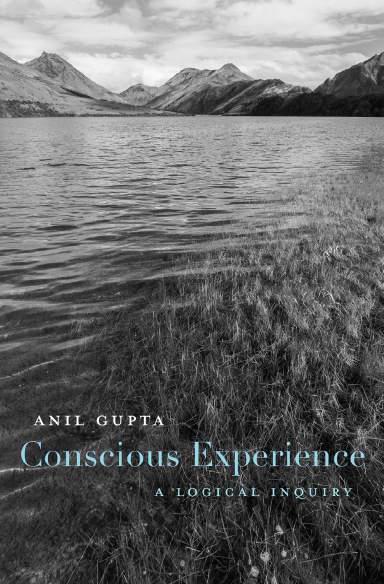
CONSCIOUS EXPERIENCE
The role of experience in cognition is a central and ancient philosophical concern. How, theorists ask, can our private experiences guide us to knowledge of a mind-independent reality? Exploring topics in logic, philosophy of mind, and epistemology, Conscious Experience proposes a new answer to this age-old question, explaining how conscious experience contributes to the rationality and content of empirical beliefs.
According to Anil Gupta, this contribution cannot be determined independently of an agent's conceptual scheme and prior beliefs, but that doesn't mean it is entirely mind-dependent. While the rational contribution of an experience is not propositionalit does not, for example, provide direct knowledge of the worldit does authorize certain transitions from prior views to new views. In short, the rational contribution of an experience yields a rule for revising views. Gupta shows that this account provides theoretical freedom: it allows the observer to radically reconceive the world in light of empirical findings. Simultaneously, it grants empirical reason significant power to constrain, forcing particular conceptions of self and world on the rational inquirer. These seemingly contrary virtues are reconciled through novel treatments of presentation, appearances, and ostensive definitions.
Collectively, Gupta's arguments support an original theory: reformed empiricism. He abandons the idea that experience is a source of knowledge and justification. He also abandons the idea that concepts are
derived from experience. But reformed empiricism preserves empiricism's central insight: experience is the supreme epistemic authority. In the resolution of factual disagreements, experience trumps all.
Anil Gupta is Alan Ross Anderson Distinguished Professor of Philosophy at the University of Pittsburgh and a Fellow of the American Academy of Arts and Sciences.
According to Anil Gupta, this contribution cannot be determined independently of an agent's conceptual scheme and prior beliefs, but that doesn't mean it is entirely mind-dependent. While the rational contribution of an experience is not propositionalit does not, for example, provide direct knowledge of the worldit does authorize certain transitions from prior views to new views. In short, the rational contribution of an experience yields a rule for revising views. Gupta shows that this account provides theoretical freedom: it allows the observer to radically reconceive the world in light of empirical findings. Simultaneously, it grants empirical reason significant power to constrain, forcing particular conceptions of self and world on the rational inquirer. These seemingly contrary virtues are reconciled through novel treatments of presentation, appearances, and ostensive definitions.
Collectively, Gupta's arguments support an original theory: reformed empiricism. He abandons the idea that experience is a source of knowledge and justification. He also abandons the idea that concepts are
derived from experience. But reformed empiricism preserves empiricism's central insight: experience is the supreme epistemic authority. In the resolution of factual disagreements, experience trumps all.
Anil Gupta is Alan Ross Anderson Distinguished Professor of Philosophy at the University of Pittsburgh and a Fellow of the American Academy of Arts and Sciences.
| Available products |
|---|
|
Book
Published 2019-02-01 by Harvard University Press |