| Vendor | |
|---|---|

|
Liepman Literary Agency
Marc Koralnik |
| Original language | |
| French | |
| Weblink | |
| http://www.grasset.fr/comment-le … | |
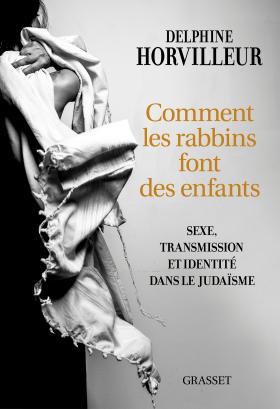
COMMENT LES RABBINS FONT LES ENFANTS: Sexe, transmission et identité dans le judaïsme
Given the current trend of ethnic and religious communities closing in on themselves, Delphine Horvilleur explores the question of identity through the prism of rabbinical tradition. To those who would like to freeze Jewish identity and put it in a box, she affirms its fertility and constant movement.
In this book, the author examines the issues of lineage, procreation, and transmission by using three guidelines to explore Judaism: How are parents made (mythology)? How is identity constructed (pedagogy)? And, how is desire created (sexology)? At a time where ethnic and religious communities retreat into their own shells and identities appear to be fossilizing, Horvilleur argues that heritage is never a carbon copy (contrary to what fundamentalism tries to affirm) but is, instead, a partial infidelity that always allows for the unexpected to arise.
It is said that Judaism is obsessed with family lineage but it is, in fact, more obsessed with rupture. The only guarantee of a tradition's vivacity is that it needs to be shaken up in order to reinvent itself. This is the basis for the author's appeal for a uterine religion that, like a womb, is nourished with previously unknown texts and allows room for the Other and the feminine.
Once again, Delphine Horvilleur proves her capacity here to rethink the great problems of our time through rabbinical literature. Proceeding with clarity and humour, quoting everyone from Emile Ajar to Amos Oz, Pierre Vassiliu, as well and Genesis and the Talmud, she ends her book with an analogy between the Text and the feminine, both endowed with the same capacity to be fruitful and multiply.
Born in 1974, female rabbi Delphine Horvilleur works within the Liberal Jewish Movement of France (MJLF) and is the editor-in-chief of Tenou'a magazine. She was named one of France's nine most important new French female intellectuals by l'Express magazine, and dubbed Manager of 2015 by the magazine Le Nouvel Economiste. She is the author of an important first book: En tenue d'Eve : féminin, pudeur et judaïsme (2013).
It is said that Judaism is obsessed with family lineage but it is, in fact, more obsessed with rupture. The only guarantee of a tradition's vivacity is that it needs to be shaken up in order to reinvent itself. This is the basis for the author's appeal for a uterine religion that, like a womb, is nourished with previously unknown texts and allows room for the Other and the feminine.
Once again, Delphine Horvilleur proves her capacity here to rethink the great problems of our time through rabbinical literature. Proceeding with clarity and humour, quoting everyone from Emile Ajar to Amos Oz, Pierre Vassiliu, as well and Genesis and the Talmud, she ends her book with an analogy between the Text and the feminine, both endowed with the same capacity to be fruitful and multiply.
Born in 1974, female rabbi Delphine Horvilleur works within the Liberal Jewish Movement of France (MJLF) and is the editor-in-chief of Tenou'a magazine. She was named one of France's nine most important new French female intellectuals by l'Express magazine, and dubbed Manager of 2015 by the magazine Le Nouvel Economiste. She is the author of an important first book: En tenue d'Eve : féminin, pudeur et judaïsme (2013).
| Available products |
|---|
|
Book
Published 2015-10-01 by Grasset |