| Vendor | |
|---|---|

|
Mohrbooks Literary Agency
Sebastian Ritscher |
| Original language | |
| English | |
| Categories | |
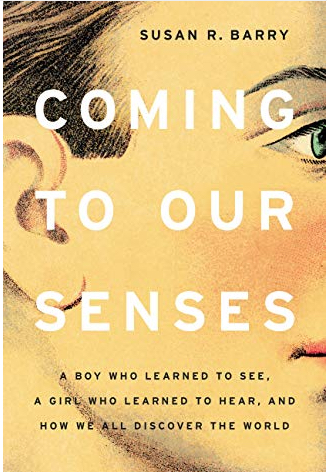
COMING TO OUR SENSES
A Boy who Learned to See, a Girl who Learned to Hear, and How We All Discover the World
In Coming to Our Senses, Susan Barry tells an inspiring story of gaining new senses in adulthood and shows that no two people see the world the same way.
Doctors have been able to cure some forms of congenital blindness and deafness for decades. But this has created another problem: most people end up hating their new senses. To ask someone to adapt to a new sense is to ask them to reshape their entire world. Many simply cannot. Every waking minute, they are bombarded by meaningless sights or sounds. Some sink into a depression so great that they lose their will to live and die.
So then what to do with the cases of Liam McCoy and Zora Damji? Liam was born blind and Zora was born deaf. Both received surgeries to restore their senses as teenagers. Today, both lead healthy, independent lives. The question at the heart of Coming to Our Senses is: why?
The answer reveals a common misunderstanding of how perception works. We tend to think of perception as a purely mechanical process, as a camera or microphone in the brain, recording the world objectively. But neurobiologist Susan Barry argues that your senses are completely your own. What you hear or see is influenced by your environment, history, age, relationships, preferences, fears, and needs. Your senses are so intimately connected to your experiences that they actually shape your personality. And as you grow, your senses grow with you, much further into adulthood than doctors once thought. The way you sense the world is part of what makes you, you.
People like Liam and Zohra provide a clear view of how our sensory abilities intertwine with our personality, and Barry spent a decade with them, watching their process. Barry finds the environmental sources of Liam's exquisite sense of direction, as well his inability to learn to recognize even his own mother's face. And she considers how Zohra's world expands upon learning that sound allows you to observe things you can't see, as well as how the voice of Zohra's Aunt Najma influenced the kinds of voices Zohra can understand best.
Ultimately, Liam and Zohra adapted to their new senses because their individual circumstances allowed them to do so, and in ways that reflect those circumstances. But there is no single answer to why some people adapt to their new senses while others do not, or for that matter, why two normally sighted people can see the same thing two different ways -- the answer depends upon the whole history and tenor of a person's life.
Coming to Our Senses tells its stories with grace, empathy, and genuine curiosity. It is a testament to the power of resilience, and a moving account of how, regardless of how we're born, we must each find our own way.
Susan R. Barry is professor emeritus of biology and neuroscience at Mount Holyoke College, where she researched stereovision, plasticity, and coordination. She's written for and been covered by the New York Times, LA Times, Big Think, NPR's Morning Edition and Fresh Air, and elsewhere. You might know Barry as "Stereo Sue," a nickname bestowed by Oliver Sacks when he wrote about her for a New Yorker essay that was later anthologized in The Mind's Eye. She lives in Massachusetts.
So then what to do with the cases of Liam McCoy and Zora Damji? Liam was born blind and Zora was born deaf. Both received surgeries to restore their senses as teenagers. Today, both lead healthy, independent lives. The question at the heart of Coming to Our Senses is: why?
The answer reveals a common misunderstanding of how perception works. We tend to think of perception as a purely mechanical process, as a camera or microphone in the brain, recording the world objectively. But neurobiologist Susan Barry argues that your senses are completely your own. What you hear or see is influenced by your environment, history, age, relationships, preferences, fears, and needs. Your senses are so intimately connected to your experiences that they actually shape your personality. And as you grow, your senses grow with you, much further into adulthood than doctors once thought. The way you sense the world is part of what makes you, you.
People like Liam and Zohra provide a clear view of how our sensory abilities intertwine with our personality, and Barry spent a decade with them, watching their process. Barry finds the environmental sources of Liam's exquisite sense of direction, as well his inability to learn to recognize even his own mother's face. And she considers how Zohra's world expands upon learning that sound allows you to observe things you can't see, as well as how the voice of Zohra's Aunt Najma influenced the kinds of voices Zohra can understand best.
Ultimately, Liam and Zohra adapted to their new senses because their individual circumstances allowed them to do so, and in ways that reflect those circumstances. But there is no single answer to why some people adapt to their new senses while others do not, or for that matter, why two normally sighted people can see the same thing two different ways -- the answer depends upon the whole history and tenor of a person's life.
Coming to Our Senses tells its stories with grace, empathy, and genuine curiosity. It is a testament to the power of resilience, and a moving account of how, regardless of how we're born, we must each find our own way.
Susan R. Barry is professor emeritus of biology and neuroscience at Mount Holyoke College, where she researched stereovision, plasticity, and coordination. She's written for and been covered by the New York Times, LA Times, Big Think, NPR's Morning Edition and Fresh Air, and elsewhere. You might know Barry as "Stereo Sue," a nickname bestowed by Oliver Sacks when he wrote about her for a New Yorker essay that was later anthologized in The Mind's Eye. She lives in Massachusetts.
| Available products |
|---|
|
Book
Published 2021-06-08 by Basic Books |