| Vendor | |
|---|---|

|
Fritz Agency
Christian Dittus |
| Original language | |
| English | |
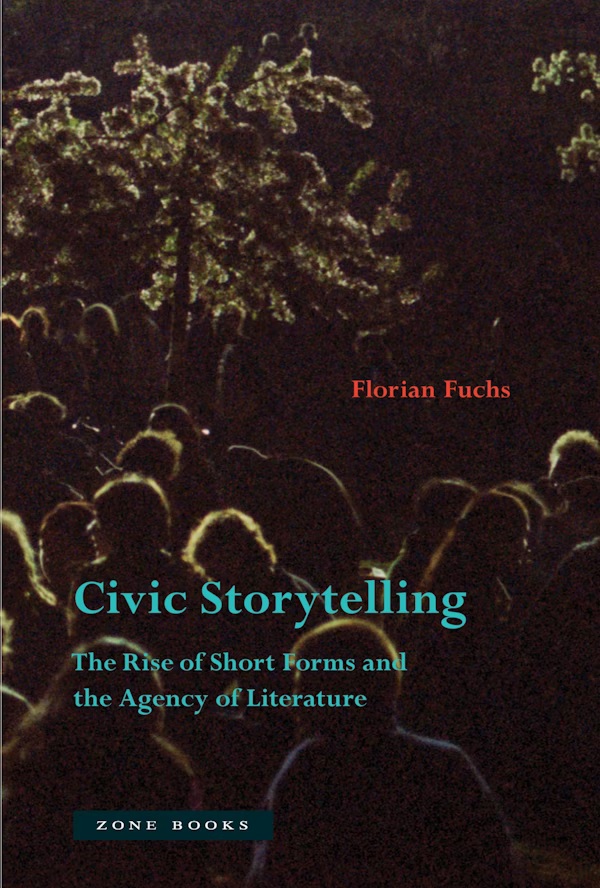
CIVIC STORYTELLING
The Rise of Short Forms and the Agency of Literature
Why did short narrative forms like the novella, fable, and fairytale suddenly emerge around 1800 as genres symptomatic of literature's role in life and society? In order to explain their rapid ascent to such importance, Florian Fuchs identifies an essential role of literature, a role traditionally performed within classical civic discourse of storytelling, by looking at new or updated forms of this civic practice in modernity. Fuchs's focus in this groundbreaking book is on the fate of topical speech, on what is exchanged between participants in argument or conversation as opposed to rhetorical speech, which emanates from and ensures political authority. He shows how after the decline of the Ars topica in the eighteenth century, various forms of literary speech took up the role of topical speech that Aristotle had originally identified. Thus, his book outlines a genealogy of various literary short forms --from fable, fairytale, and novella to twenty-first century video storytelling -- that attempted on both "high" and "low" levels of culture to exercise again the social function of topical speech. Some of the specific texts analyzed include the novellas of Theodor Storm and the novella-like lettre de cachet, proverbial fictions of Gustave Flaubert and Gottfried Keller, the fairytale as rediscovered by Vladimir Propp and Walter Benjamin, the epiphanies of James Joyce, and the video narratives of Hito Steyerl.
FLORIAN FUCHS is a scholar of literary epistemology and media studies. He is a postdoctoral researcher at Freie Universitaet Berlin and the coeditor of History, Metaphors, Fables: A Hans Blumenberg Reader.
FLORIAN FUCHS is a scholar of literary epistemology and media studies. He is a postdoctoral researcher at Freie Universitaet Berlin and the coeditor of History, Metaphors, Fables: A Hans Blumenberg Reader.
| Available products |
|---|
|
Book
Published 2023-05-01 by Zone Books |