| Vendor | |
|---|---|

|
Liepman Literary Agency
Marc Koralnik |
| Original language | |
| English | |
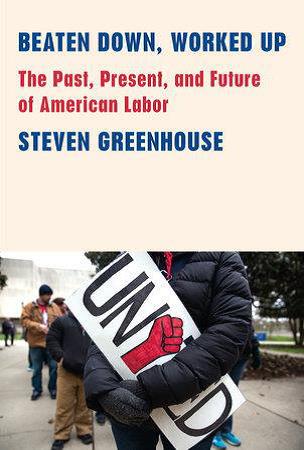
BEATEN DOWN, WORKED UP:
THE PAST, PRESENT, AND FUTURE OF AMERICAN LABOR
From the longtime New York Times labor correspondent, an in-depth look at working men and women in America, the challenges they face, and how they can be re-empowered.
In an era when corporate profits have soared while wages have flatlined, millions of workers are searching for ways to improve their lives, and they're often turning to labor unions and worker action. Wage stagnation, low-wage work, and blighted blue-collar communities have become an all-too-common part of modern-day America, and behind these trends is a little-discussed problem: the decades-long decline in worker power.
Beaten Down, Worked Up traces the rise of labor: the Uprising of the 20,000 (female garment workers) in NYC in 1909; the Triangle Fire; the great Frances Perkins; the Flint Sit-down Strike; Walter Reuther and the Treaty of Detroit; the Memphis Sanitation Workers' Strike. The book then examines the decline of labor: the disastrous PATCO strike; globalization's destructive effect on unions; Scott Walker's (and the Koch Brothers') war on public-sector unions; labor's disastrous showing in politics in 2016. The last third of the book focuses on what's happening in labor nowadays, with chapters on the gig economy and Uber, the Fight for $15 and some wonderful groups fighting for workers, like the Coalition of Immokalee Workers, the Los Angeles Alliance for a New Economy, and the nation's best labor-management partnership, Kaiser-Permanente. Greenhouse proposes concrete, feasible ways in which workers' collective power can beand is beingrekindled and reimagined in the twenty-first century.
Steven Greenhouse was a reporter for The New York Times from 1983 to 2014 and covered labor and the workplace for nineteen years there. He also served as a business and economics reporter and a diplomatic and foreign correspondent. He has been honored with the Society of Professional Journalists Deadline Club award, a New York Press Club award, a Gerald Loeb Award for Distinguished Business and Financial Reporting, and the Hillman Prize for Book Journalism for his last book, The Big Squeeze: Tough Times for the American Worker (Knopf 2008).
Beaten Down, Worked Up traces the rise of labor: the Uprising of the 20,000 (female garment workers) in NYC in 1909; the Triangle Fire; the great Frances Perkins; the Flint Sit-down Strike; Walter Reuther and the Treaty of Detroit; the Memphis Sanitation Workers' Strike. The book then examines the decline of labor: the disastrous PATCO strike; globalization's destructive effect on unions; Scott Walker's (and the Koch Brothers') war on public-sector unions; labor's disastrous showing in politics in 2016. The last third of the book focuses on what's happening in labor nowadays, with chapters on the gig economy and Uber, the Fight for $15 and some wonderful groups fighting for workers, like the Coalition of Immokalee Workers, the Los Angeles Alliance for a New Economy, and the nation's best labor-management partnership, Kaiser-Permanente. Greenhouse proposes concrete, feasible ways in which workers' collective power can beand is beingrekindled and reimagined in the twenty-first century.
Steven Greenhouse was a reporter for The New York Times from 1983 to 2014 and covered labor and the workplace for nineteen years there. He also served as a business and economics reporter and a diplomatic and foreign correspondent. He has been honored with the Society of Professional Journalists Deadline Club award, a New York Press Club award, a Gerald Loeb Award for Distinguished Business and Financial Reporting, and the Hillman Prize for Book Journalism for his last book, The Big Squeeze: Tough Times for the American Worker (Knopf 2008).
| Available products |
|---|
|
Book
Published 2019-08-01 by Knopf |