| Vendor | |
|---|---|

|
Fritz Agency
Christian Dittus |
| Original language | |
| English | |
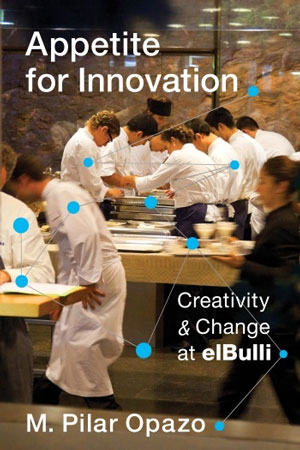
APPETITE FOR INNOVATION
Creativity and Change at elBulli
The name elBulli is synonymous with creativity and innovation. People traveled from all over the world?if they could secure a coveted reservation during its six months of operation?to experience the wonder that chef Ferran Adrià and his team concocted in their test kitchen, never offering the same dish twice. Yet elBulli's business model proved unsustainable. The restaurant converted to a foundation in 2011, and is working hard on its next revolution. Will elBulli continue to innovate? What must an organization do to create something truly new?
APPETITE FOR INNOVATION is an organizational analysis of elBulli and the nature of innovation. M. Pilar Opazo was with elBulli's inner circle as the restaurant transitioned from a for-profit business to its new organizational model. She compares this moment to the culture of change that first made elBulli famous, and she describes the novel forms of communication, idea mobilization, and embeddedness that continue to encourage the staff to focus and invent as a whole. She concludes that the successful strategies employed by elBulli are similar to those required for innovative achievements in art, music, business, and technology, proving the model's value across organizations and industries.
M. Pilar Opazo is a post-doctoral at Columbia Business School, Columbia University. She has co-author two books in Spanish and her more recent work has been published in Sociological Theory and International Journal of Gastronomy and Food Science. This is her first book in English.
APPETITE FOR INNOVATION is an organizational analysis of elBulli and the nature of innovation. M. Pilar Opazo was with elBulli's inner circle as the restaurant transitioned from a for-profit business to its new organizational model. She compares this moment to the culture of change that first made elBulli famous, and she describes the novel forms of communication, idea mobilization, and embeddedness that continue to encourage the staff to focus and invent as a whole. She concludes that the successful strategies employed by elBulli are similar to those required for innovative achievements in art, music, business, and technology, proving the model's value across organizations and industries.
M. Pilar Opazo is a post-doctoral at Columbia Business School, Columbia University. She has co-author two books in Spanish and her more recent work has been published in Sociological Theory and International Journal of Gastronomy and Food Science. This is her first book in English.
| Available products |
|---|
|
Book
Published 2016-07-01 by Columbia University Press |