| Vendor | |
|---|---|

|
Mohrbooks Literary Agency
Sebastian Ritscher |
| Original language | |
| English | |
| Categories | |
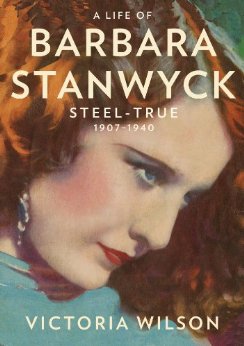
A LIFE OF BARBARA STANWYCK
Steel - True 1907 - 1940 Volume One
Frank Capra called her “The greatest emotional actress the screen has yet known.” She was one of its most natural, timeless, and underrated stars.
She was one of its most natural, timeless, and underrated stars. Now, Victoria Wilson gives us the first full-scale life of Barbara Stanwyck, whose astonishing career in movies (eighty-eight in all) spanned four decades beginning with the coming of sound, and lasted in television from its infancy in the 1950s through the 1980s—a book that delves deeply into her rich, complex life and explores her extraordinary range of motion pictures, many of them iconic. Here is her work, her world, her Hollywood.
We see the quintessential Brooklyn girl whose family was in fact of old New England stock . . . her years in New York as a dancer and Broadway star . . . her fraught mar riage to Frank Fay, Broadway genius, who influenced a generation of actors and comedians (among them, Jack Benny and Stanwyck herself ) . . . the adoption of a son, embattled from the outset; her partnership with the “unfunny” Marx brother, Zeppo, crucial in shaping the direction of her work, and who, together with his wife, formed a trio that created one of the finest horse-breeding farms in the west; her fairy-tale romance and marriage to the younger Robert Taylor, America’s most sought-after— and beautiful—male star.
Here is the shaping of her career with many of Hol lywood’s most important directors: among them, Frank Capra, “Wild Bill” William Wellman (“When you get beauty and brains together,” he said, “there’s no stopping the lucky girl who possesses them. The best example I can think of is Barbara”), King Vidor, Cecil B. De Mille, and Preston Sturges, all set against the times—the Depression, the New Deal, the rise of the unions, the advent of World War II—and a fast-changing, coming-of-age motion picture industry.
And at the heart of the book, Stanwyck herself—her strengths, her fears, her frailties, her losses and desires; how she made use of the darkness in her soul in her work and kept it at bay in her private life, and finally, her transformation from shunned outsider to one of Holly wood’s—and America’s—most revered screen actresses. Writing with the full cooperation of Stanwyck’s family and friends, and drawing on more than two hundred interviews with actors, directors, cameramen, screen writers, costume designers, et al., as well as making use of letters, journals, and private papers, Victoria Wilson has brought this complex artist brilliantly alive. Her book is a revelation of the actor’s life and work.
We see the quintessential Brooklyn girl whose family was in fact of old New England stock . . . her years in New York as a dancer and Broadway star . . . her fraught mar riage to Frank Fay, Broadway genius, who influenced a generation of actors and comedians (among them, Jack Benny and Stanwyck herself ) . . . the adoption of a son, embattled from the outset; her partnership with the “unfunny” Marx brother, Zeppo, crucial in shaping the direction of her work, and who, together with his wife, formed a trio that created one of the finest horse-breeding farms in the west; her fairy-tale romance and marriage to the younger Robert Taylor, America’s most sought-after— and beautiful—male star.
Here is the shaping of her career with many of Hol lywood’s most important directors: among them, Frank Capra, “Wild Bill” William Wellman (“When you get beauty and brains together,” he said, “there’s no stopping the lucky girl who possesses them. The best example I can think of is Barbara”), King Vidor, Cecil B. De Mille, and Preston Sturges, all set against the times—the Depression, the New Deal, the rise of the unions, the advent of World War II—and a fast-changing, coming-of-age motion picture industry.
And at the heart of the book, Stanwyck herself—her strengths, her fears, her frailties, her losses and desires; how she made use of the darkness in her soul in her work and kept it at bay in her private life, and finally, her transformation from shunned outsider to one of Holly wood’s—and America’s—most revered screen actresses. Writing with the full cooperation of Stanwyck’s family and friends, and drawing on more than two hundred interviews with actors, directors, cameramen, screen writers, costume designers, et al., as well as making use of letters, journals, and private papers, Victoria Wilson has brought this complex artist brilliantly alive. Her book is a revelation of the actor’s life and work.
| Available products |
|---|
|
Book
Published 2013-11-12 by Simon & Schuster |
|
Book
Published 2013-11-12 by Simon & Schuster |