| Vendor | |
|---|---|

|
Liepman Literary Agency
Marc Koralnik |
| Original language | |
| Chamorro | |
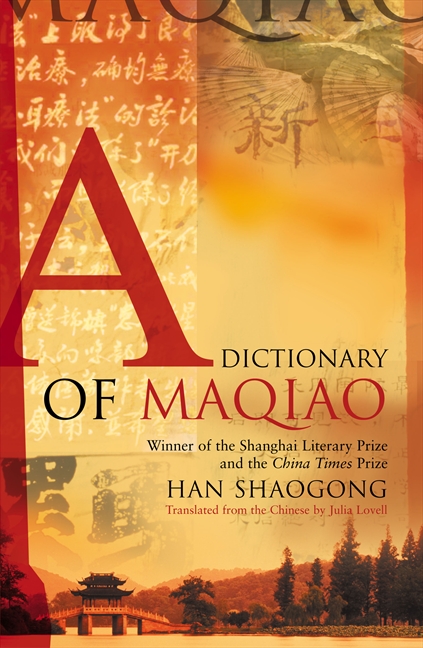
A DICTIONARY OF MAQIAO
The most important novel and a landmark work of 20th century Chinese literature by one of the greatest living Chinese novelists
[A] magnificent book, epic in its ambitions and sweep without any of the sentimental obfuscation on which that genre so often depends. The Village Voice In its formal inventiveness, its nuanced depiction of Chinese peasant life, and its speculative explorations into the Chinese cultural psyche, this is one of the finest novels of the post-Mao era to so far make its way into English. Review of Contemporary Fiction * Winner of the Newman Prize for Chinese Literature (2011) * A landmark of modern Chinese literature * Author awarded the French Ordre des Arts et des Lettres * Asia Weekly's 100 Best Chinese Novels of the 20th Century (1999) From the daring imagination of one of China's greatest living novelists comes a work of startling power and originalitythe story of a young man displaced to a small village in rural China during the 1960s. Told in the format of a dictionary, with a series of vignettes disguised as entries, A Dictionary of Maqiao is a novel of bold inventionand a fascinating, comic, deeply moving journey through the dark heart of the Cultural Revolution. Entries trace the wisdom and absurdities of Maqiao: the petty squabbles, family grudges, poverty, infidelities, fantasies, lunatics, bullies, superstitions, and especially the odd logic in their use of languagewhere the word for beginning is the same as the word for end; little big brother means older sister; to be scientific means to be lazy; and streetsickness is a disease afflicting villagers visiting urban areas. Filled with colorful charactersfrom a weeping ox to a man so poisonous that snakes die when they bite himA Dictionary of Maqiao is both an important work of Chinese literature and a probing inquiry into the extraordinary power of language. Han Shaogong (b.1953) is one of the representative names of Chinese contemporary literature, often mentioned in the same breath as Wang Meng, Feng Jicai and Liu Suola. During the mid-eighties, he led the development of a literary school called "Root-seeking literature," the practitioners of which sought to distill an independent, "Chinese" narrative from their rural backgrounds. He co-translated the first Chinese edition of Milan Kundera's THE UNBEARABLE LIGHTNESS OF BEING in 1987. Passionately interested (like Shen Congwen) in the mystical traditions that set Hunan and its people apart from the rest of China, he has long searched for an alternative to Han culture in Hunan's ancient history. English translation by Julia Lovell
| Available products |
|---|
|
Book
Published 1996-05-11 by Writers Publishing House |